



rTMS for Depression
Depression is not just feeling sad. It is waking up tired even after sleeping. It is sitting with your family and feeling completely alone. It is knowing you should feel okay, but not being able to feel anything at all. If any of this sounds familiar, you are in the right place. We treat depression with rTMS and therapy together, and we have been doing it for years.
How We Treat Depression
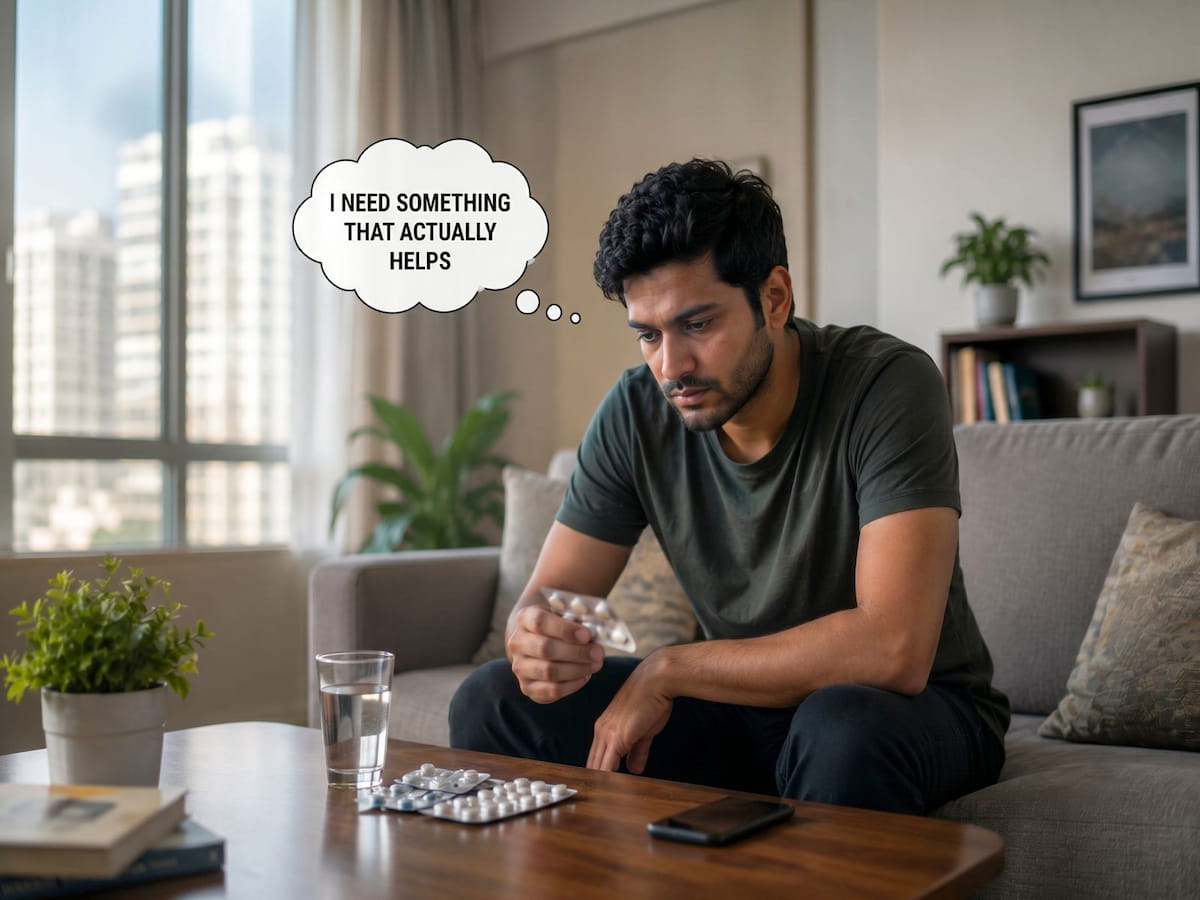
When someone is going through depression, certain parts of the brain work differently than the way they should. The part that gives you energy, the feeling of wanting to do things, the ability to feel good, it all becomes slow. That is why medicines sometimes help but are not always enough. That is why you can know everything is fine on the outside and still not feel fine on the inside.
At MindfulTMS, we do not just do rTMS and send you home. We treat depression with rTMS and therapy together. rTMS gently helps your brain start working better again. Therapy gives you the skills to manage your thoughts, get back to your daily life, and start feeling like yourself again. Together, they work better than either one alone.
We do not use the same plan for everyone. Our team looks at your situation, what you have tried before, and how you are responding. Then they adjust your treatment plan. That is our real difference.
What Treatment Looks Like
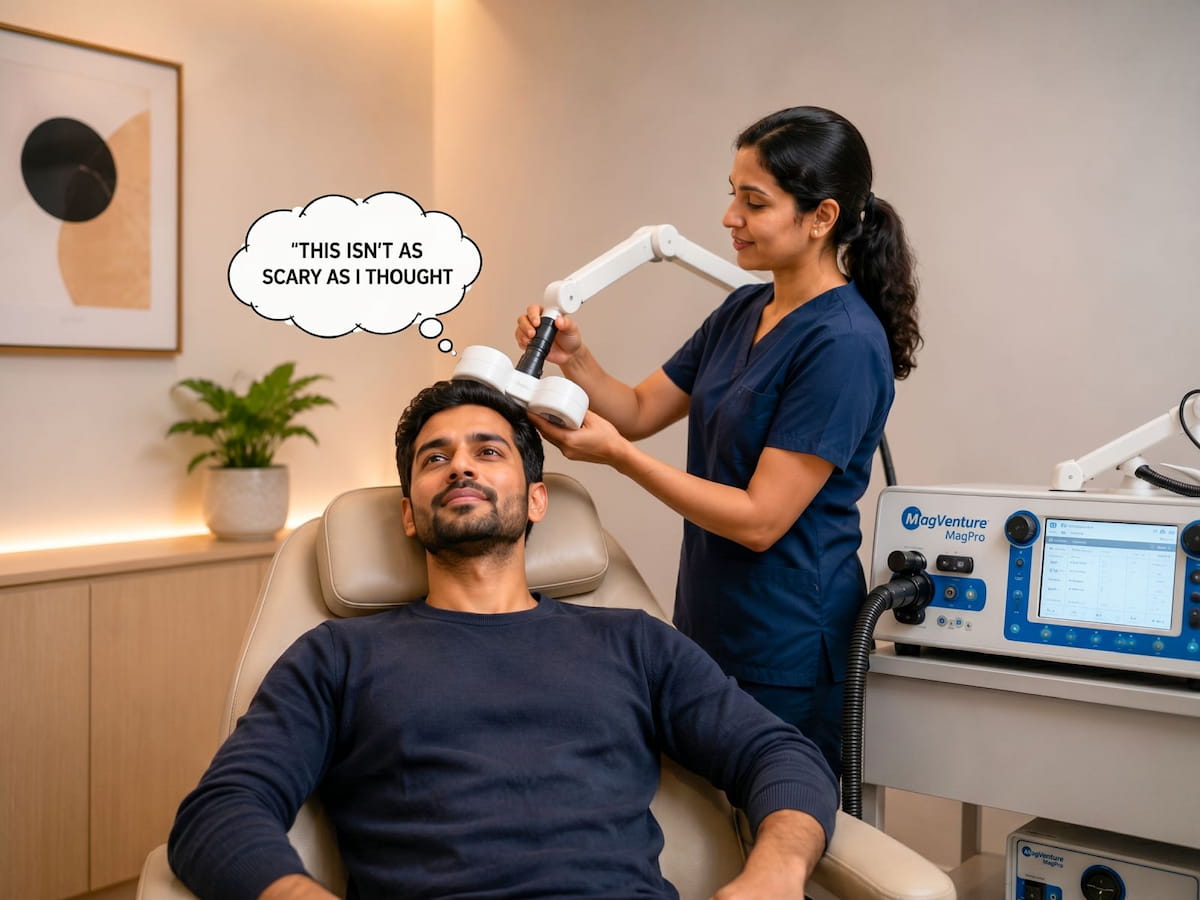
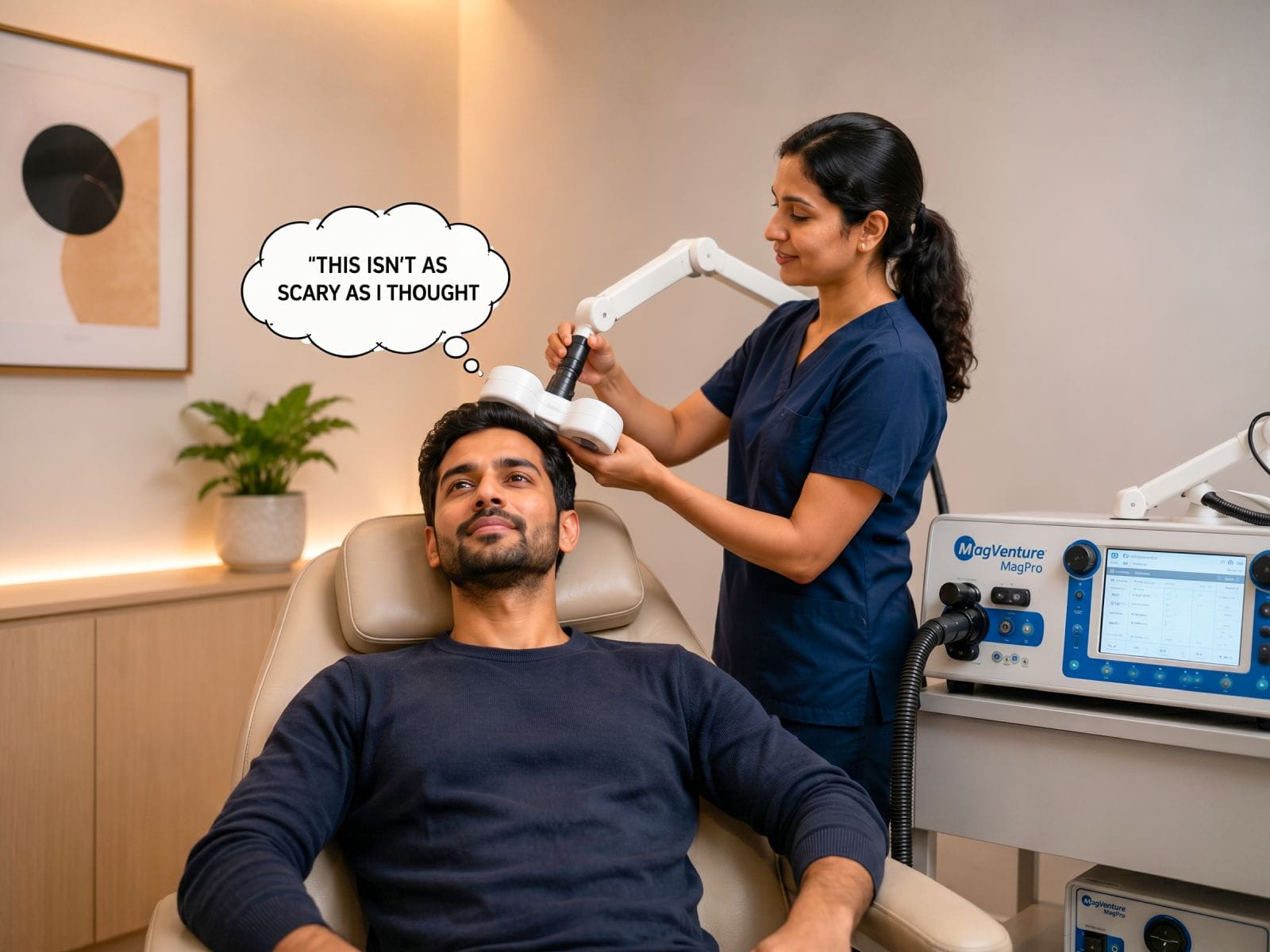
rTMS sessions happen 5 days a week for 5 to 6 weeks. That is 25 to 30 sessions in total. Each session takes 20 to 40 minutes.
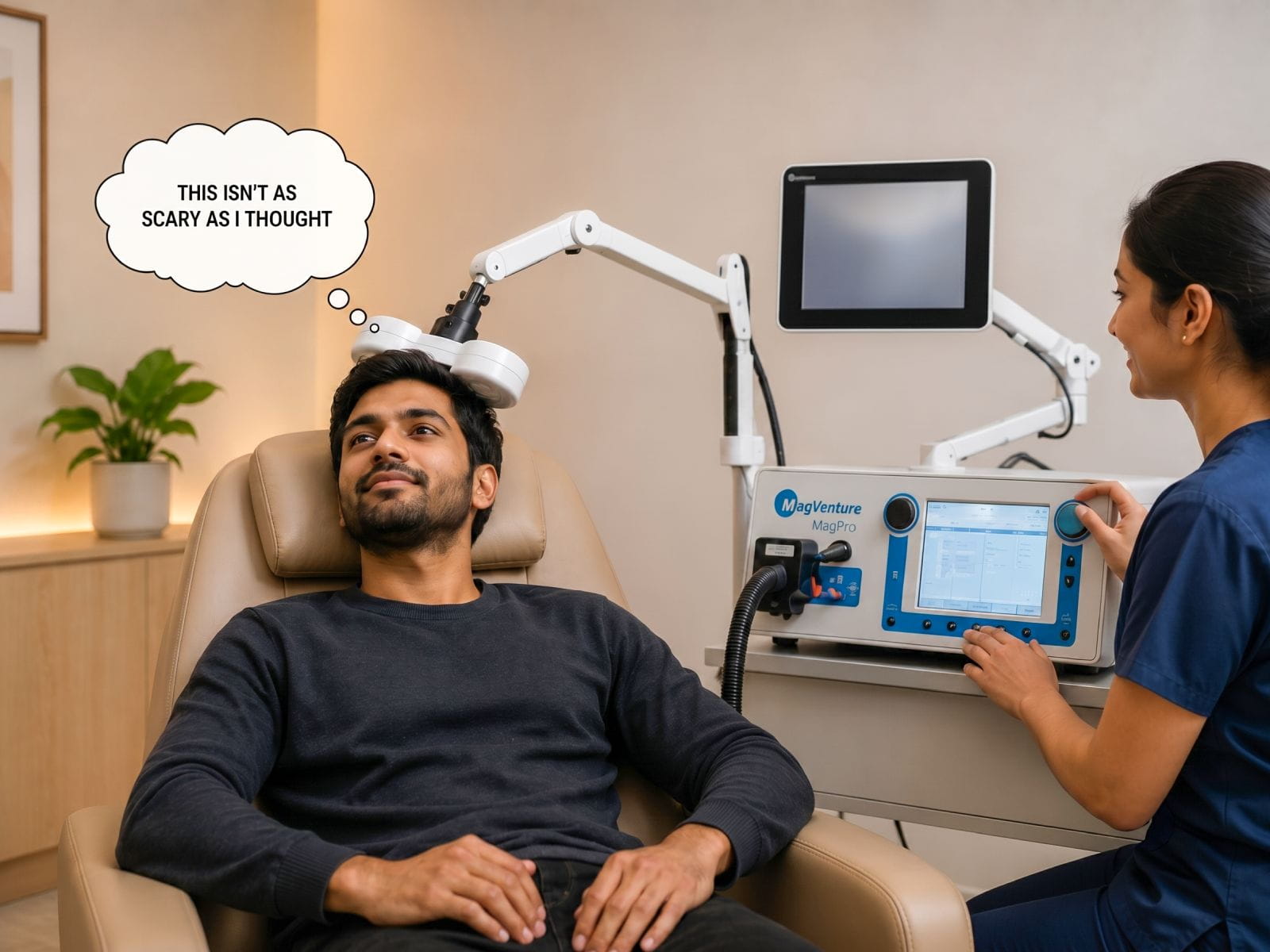
You sit in a comfortable chair. A small device is placed near your head. You feel a light tapping on your scalp. That is it. No needles, you are fully awake, and you do not need any rest after. When it is done, you just spend the rest of your day like any other day.
Therapy happens separately during the week. It could be on one of your rTMS days or on a different day. Your therapist will work with you on the thoughts that pull you down, the habits you have lost, and how to slowly get back to feeling like yourself.
Medicines: You do not have to stop your current medicines. Most people continue their medicines during rTMS, and for many people, medicines along with rTMS can make the treatment work better. rTMS is also an option if you are just starting out and prefer not to take medicines at all. Our doctors will discuss what makes sense for your situation.
Why People Trust Us


Depression is one of the most common conditions we treat. We have worked with more than 800 people and done over 25,000 rTMS sessions across 3 locations. Our doctors are trained at leading institutions like AIIMS New Delhi, and our experts are always making sure the treatment is being done properly.
800+
People Treated
25,000+
rTMS Sessions
3
Locations
We are not a single-treatment clinic. We have psychiatrists, psychologists, and brain mapping technology under one roof, so your doctors, your therapist, and your treatment team all work together.
Ready to take the first step?
You do not need to be sure or have all the answers. Just talk to our team once. They will listen, explain what we can do, and help you decide.
Your first step is a conversation, not a commitment. Nothing to prepare — just reach out in the way that feels easy for you.
Your information is secure and confidential.
rTMS for Depression: Does It Actually Help?
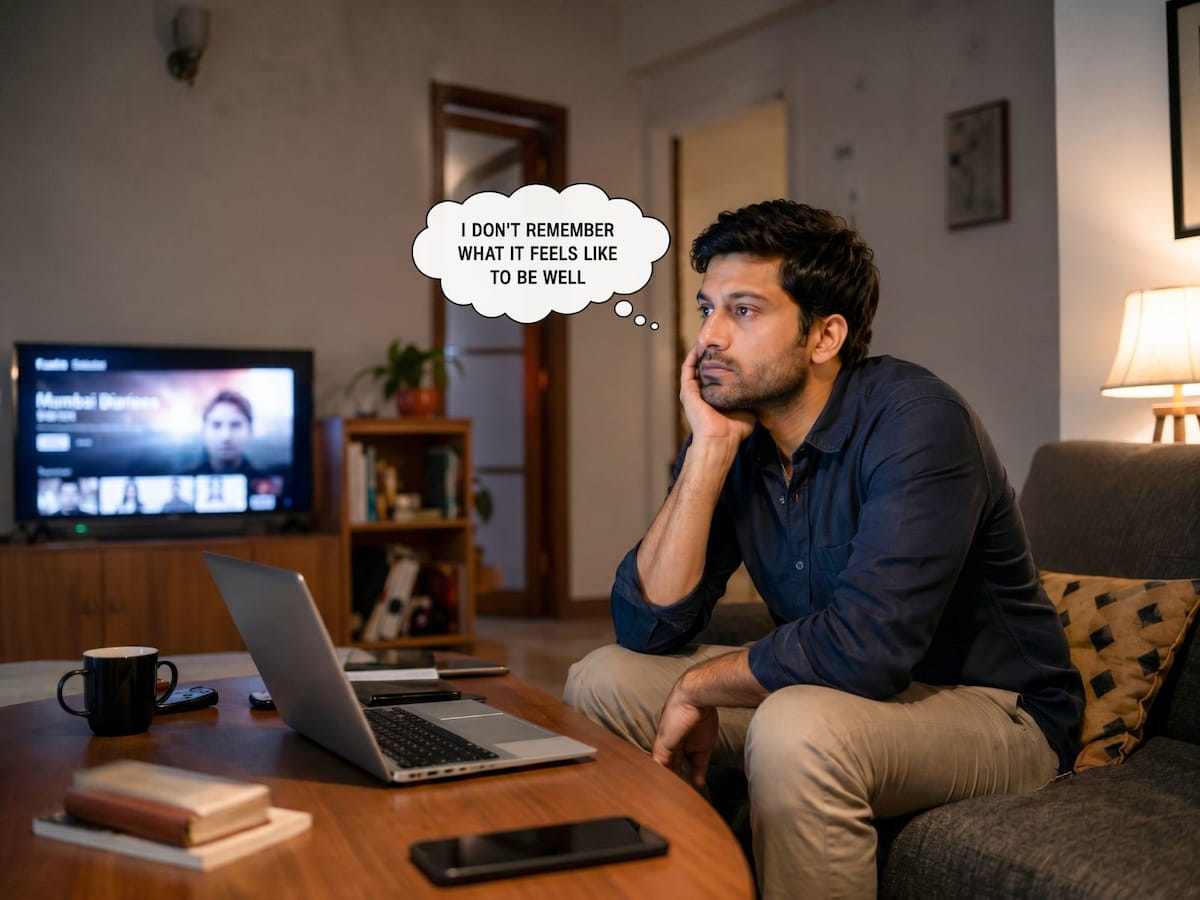
You wake up and you are already feeling low. Not the kind of tired that goes away after sleeping. Just low, dull, empty. You go to office because you have to. You sit with your family at dinner but you are sitting there and not feeling anything. You know you should feel okay. Everything is fine on the outside. But something does not feel right, and you cannot explain it to anyone.
Maybe you have tried medicines. Maybe they helped a little, but not enough. Maybe the side effects were difficult. Maybe your family is worried and you do not know what to tell them. Maybe you have been managing for so long that you have forgotten what it feels like to be well.
If any of this sounds like something you have gone through, this article is for you.
What Is Actually Happening in Your Brain
Depression is not sadness and it is not weakness. It is not something you can push through with enough effort.
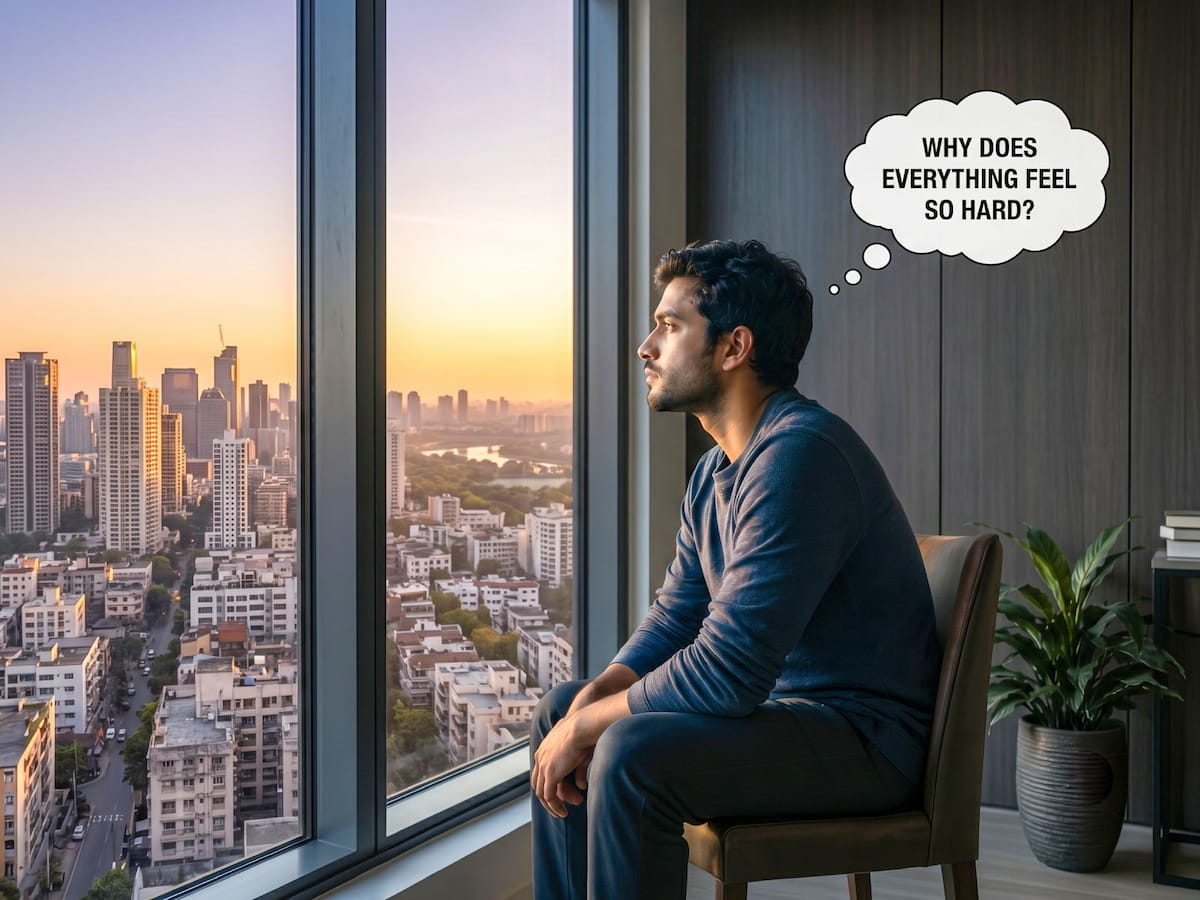

When someone is going through depression, certain parts of the brain work differently than the way they should. The part that gives you energy, the feeling of wanting to do things, the ability to feel good, it all becomes slow. That is why getting out of bed feels like too much. That is why you can be surrounded by people who love you and still feel completely alone. That is why you know everything is fine on the outside but you still cannot feel it on the inside.
Medicines work by trying to help this. For many people, they make a real difference. But for some people, medicines help only a little. The brain is still not working the way it should. That is not your fault. It just means the brain needs something more to help it come back.
What rTMS Does for Depression
rTMS stands for repetitive Transcranial Magnetic Stimulation. In simple terms, it sends soft magnetic waves to the part of your brain that has slowed down in depression. These soft magnetic waves gently help the brain start working the way it should.
Think of it this way. If the part of your brain that controls mood has slowed down, rTMS gently helps bring it back. It does not make everything better overnight. But it changes things enough that the low feeling starts to lift, the energy starts to come back, and things begin to feel a little more like they used to.
About 45 to 60% of people saw real improvement. That means the depression became something they could actually feel the difference from. Not a small change, but something they could feel in their day, in their energy, in their ability to be with the people around them. These are real numbers from real studies. And like any treatment, it works differently for different people. The best way to know if this can help you is to talk to our team.
What Treatment Actually Looks Like
You come in 5 days a week for 5 to 6 weeks. That is 25 to 30 sessions in total.
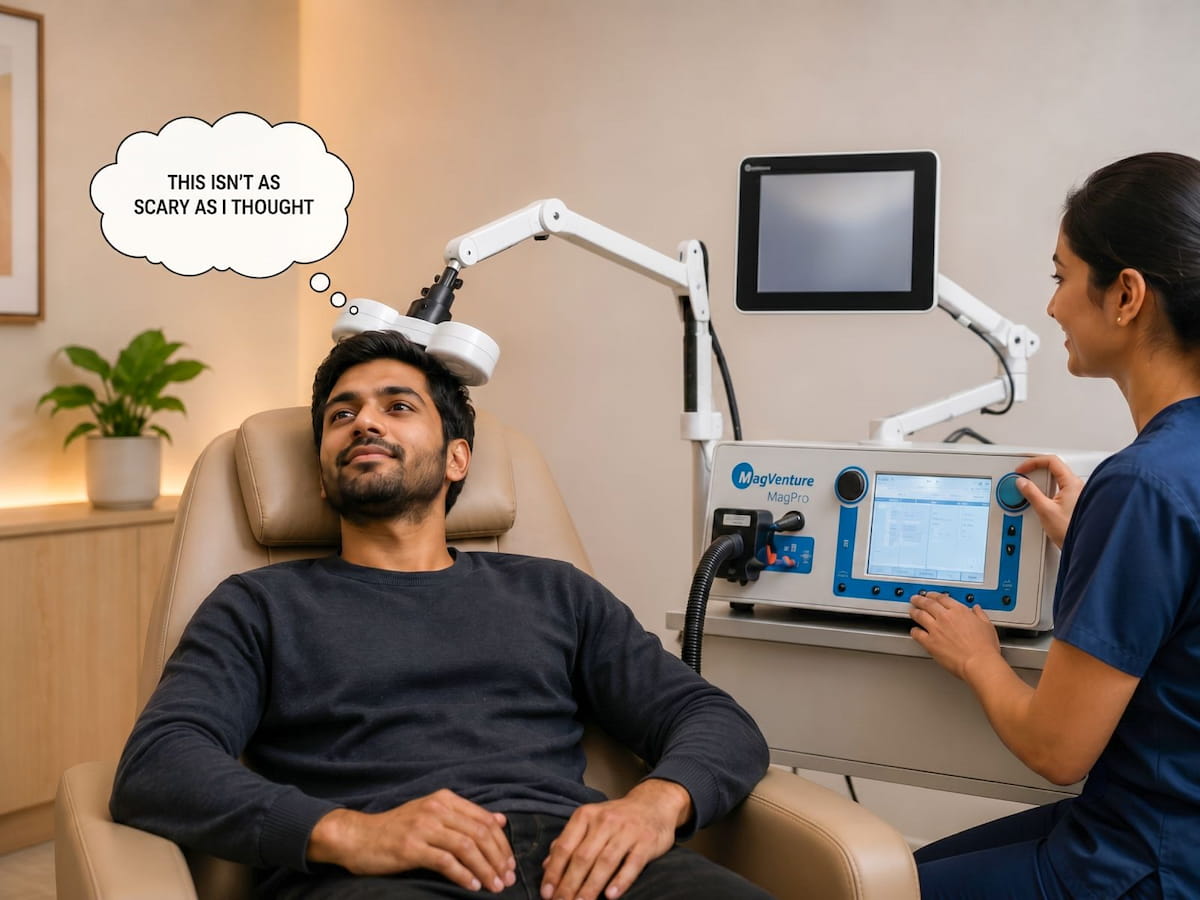
You sit in a comfortable chair. A small device is placed near your head. You feel a light tapping on your scalp. That is it. Each session takes 20 to 40 minutes. No needles, you are fully awake, and you do not need any rest after. When it is done, you just spend the rest of your day like any other day. You can drive, go to office, do whatever you normally do.
Most people say it is not scary at all. It feels more like spending time in a comfortable space than being in a clinic. Someone from the team is with you the whole time, talking to you, making sure you are comfortable.
Why rTMS and Therapy Work Better Together
rTMS gently helps your brain start working better again. That is the brain part of the problem.
But depression is not just about the brain. Over time, it changes the way you think about yourself, about the future, about what is possible. You stop doing things you used to enjoy. You stop meeting people. You tell yourself it is always going to be like this. Those habits of thinking need to change too, and that is what therapy helps you do.
When things start becoming a little easier with rTMS, therapy works better too. You have more energy to do the work. What your therapist teaches you actually works, because your brain is not making everything feel so difficult.


At MindfulTMS, rTMS and therapy happen during the same treatment period, but not at the same time every day. rTMS is 5 days a week. Therapy happens separately, on one of your rTMS days or on a different day. Your team will plan the schedule with you.
If you do rTMS without therapy, you lose a lot of what the treatment can do. And if you do therapy while the brain is still feeling low and slow, it can feel like you are trying very hard but nothing is moving. Together, they help each other work better.
What About Medicines?
You do not have to stop your medicines to start rTMS. Most people continue their current medicines during treatment.
In fact, for depression, medicines along with rTMS often work better than rTMS alone. Your doctors will help you figure out what works together for your situation.
rTMS is also an option if you are just starting out and prefer not to take medicines. Or if you have been on medicines for a long time and feel like you need something more. That is something to discuss with our team during your first conversation. There is no one right answer. It depends on your situation.
Being Honest With You
rTMS is not a cure for depression. No treatment is. Depression develops over months and years, and no single treatment makes it disappear completely.
It is also not instant. You will not feel different after the first or second session. Most people start noticing changes after 2 to 3 weeks, and the full benefit comes by the end of the 5 to 6 week course.
Not everyone responds, and we are always honest about that. If rTMS does not help enough, your team will talk to you about other options. There are always more things to try. The goal is to find what works for you, even if it takes more than one attempt.
rTMS is not about replacing everything else you are doing. It is one more option. A good one. It can help the other things you are doing work better.
Common Questions About rTMS for Depression
Take the Next Step
You have been managing this for long enough. You do not need to be sure — just talk to our team once. They will listen to your situation, explain what we can do, and help you figure out if this is worth trying.
Reach out in whichever way feels easy for you — a quick message, a call from us, or a booked visit. All three lead to the same first conversation.
MindfulTMS has clinics in Delhi (Greater Kailash 1), Bangalore Whitefield, and Bangalore Hebbal (inside Aster CMI Hospital).
Want to understand more about how rTMS works in general? Read our guide: What Is rTMS?
Looking for more about Depression as a condition? Read: Understanding Depression
Ready to choose a clinic? See our rTMS for Depression service page
Understanding Depression: What It Is and How People Get Better
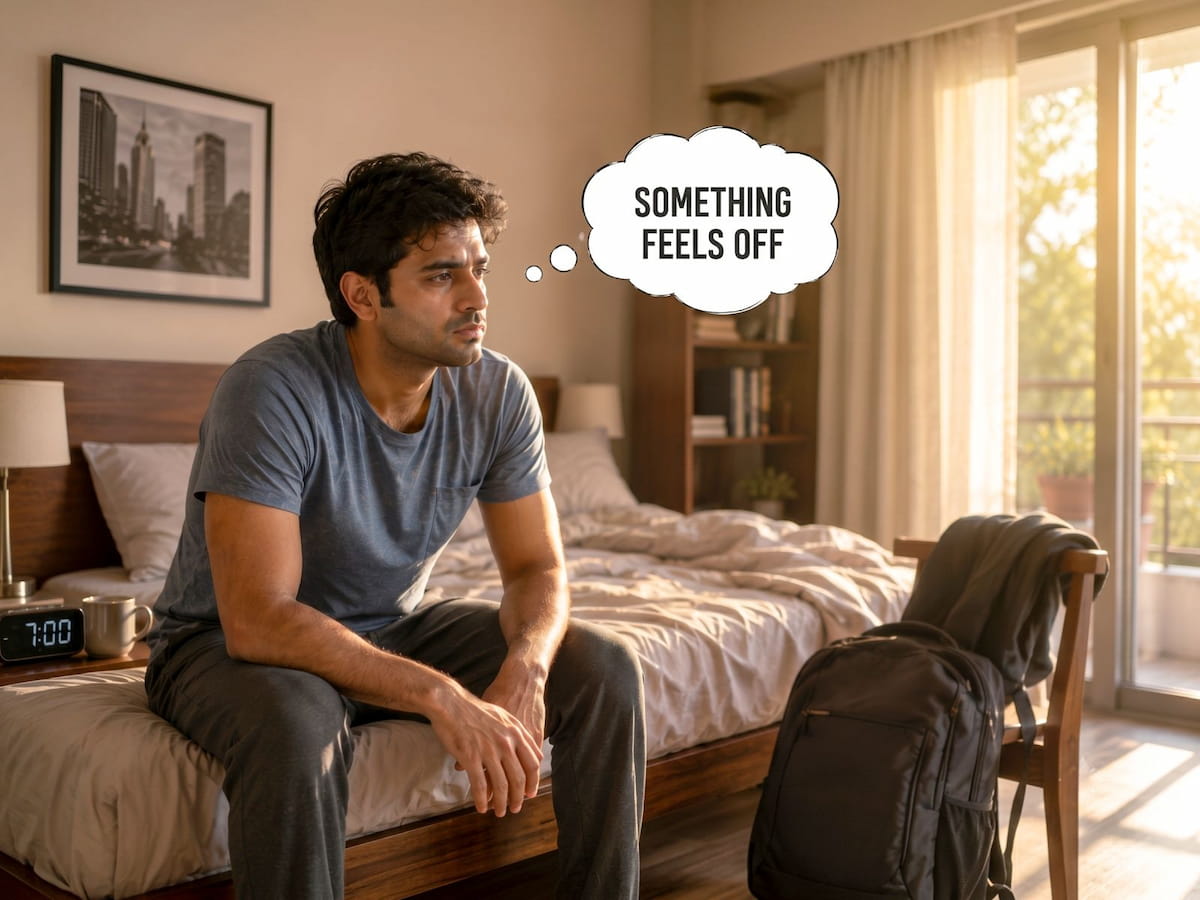
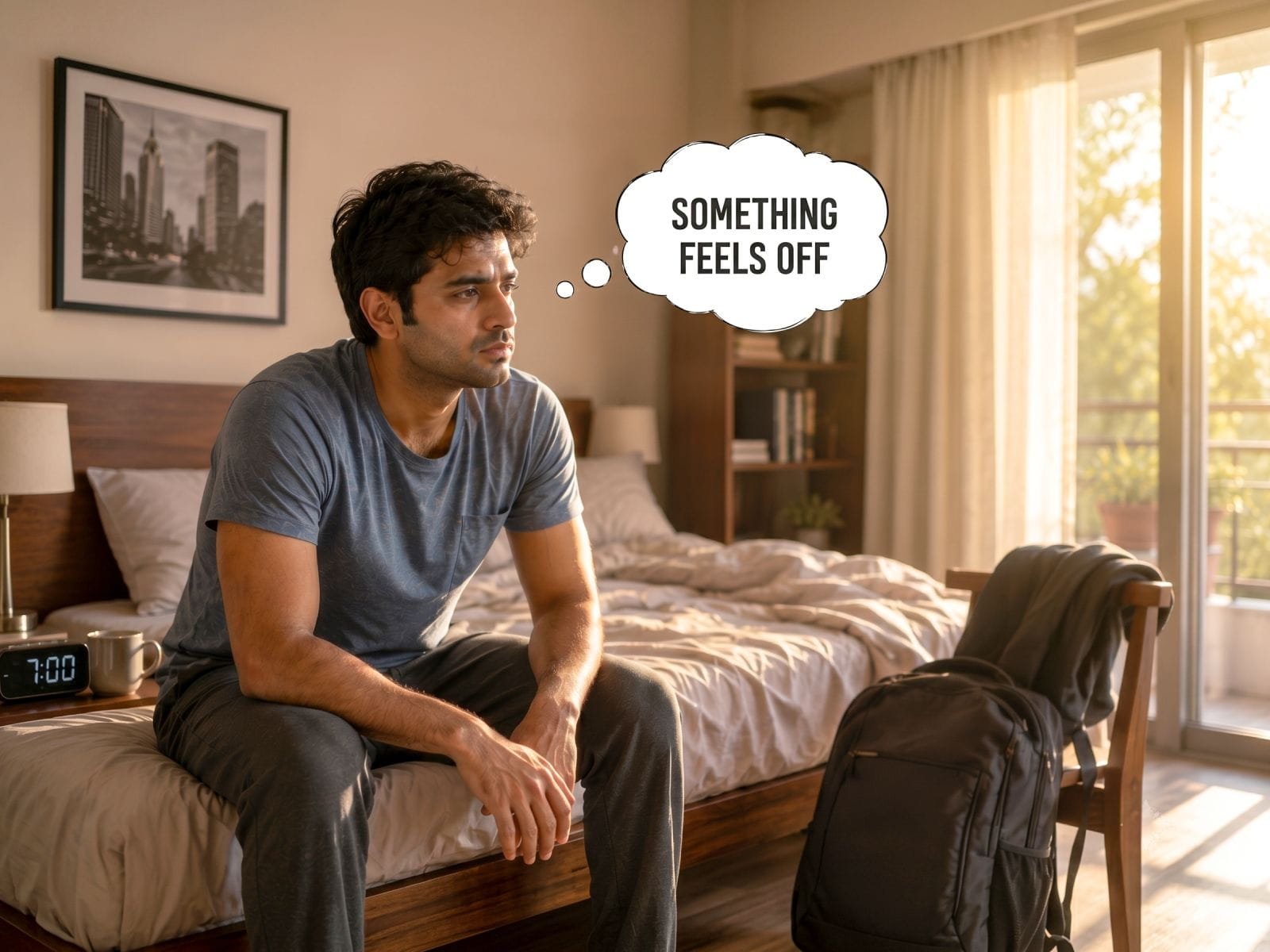
You have probably been feeling this way for some time now. You wake up tired even after sleeping. Things that used to matter do not feel like much anymore. Going to work. Spending time with family. Eating food you liked. You are just about managing each day, but it takes everything you have. And somewhere in the back of your mind, you have started to wonder if this is depression.
Maybe a doctor said something. Maybe you read about it online late at night and thought, yes, that sounds like me. But you have not done much about it yet. Maybe you are waiting to see if things settle on their own. Maybe the people around you do not know. Maybe you are not sure where to start, or whether it is serious enough to do something about.
If that is where you are, this is for you.
What Depression Actually Is
Depression is not sadness. Sadness is what you feel when something difficult happens, and it fades with time. Depression is different. It stays. It is there even when life looks fine from the outside. Even when you have no obvious reason to feel this way.
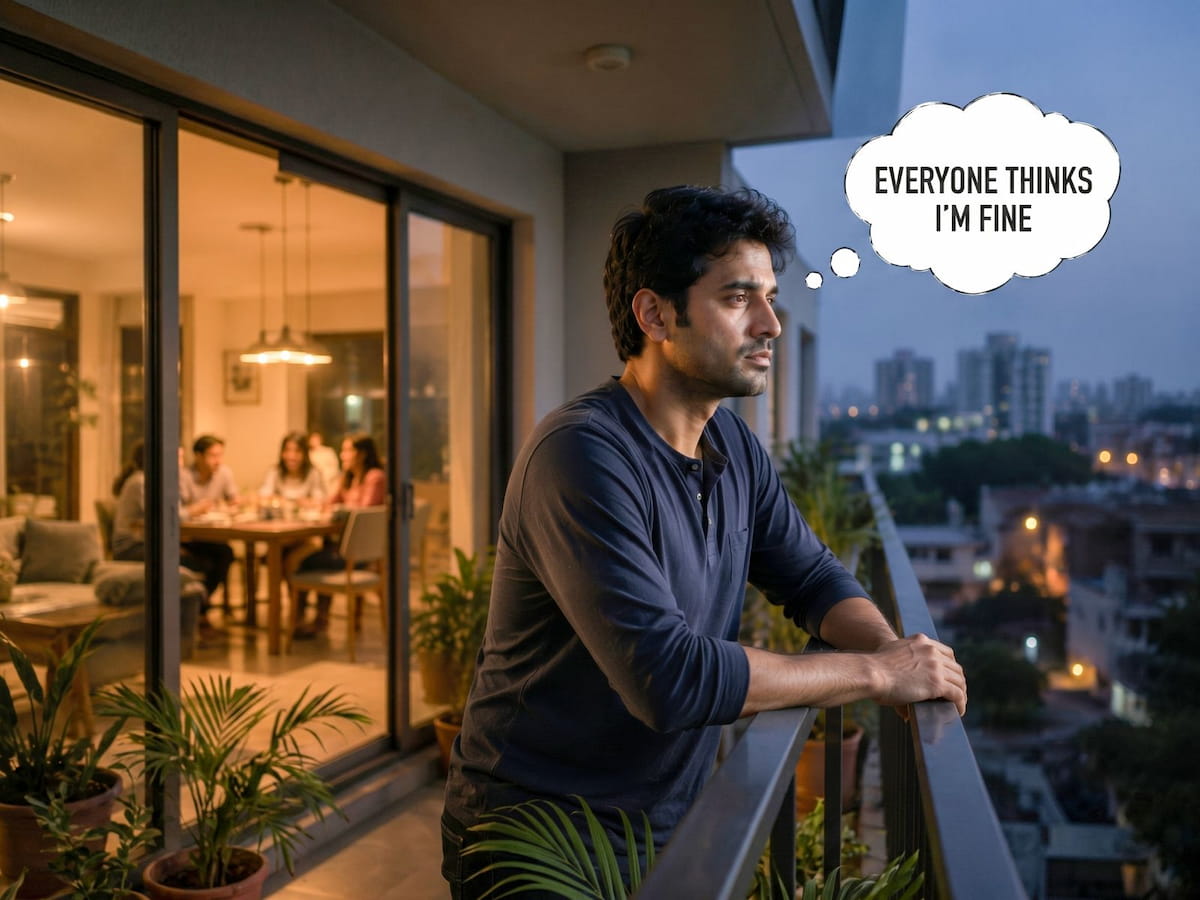
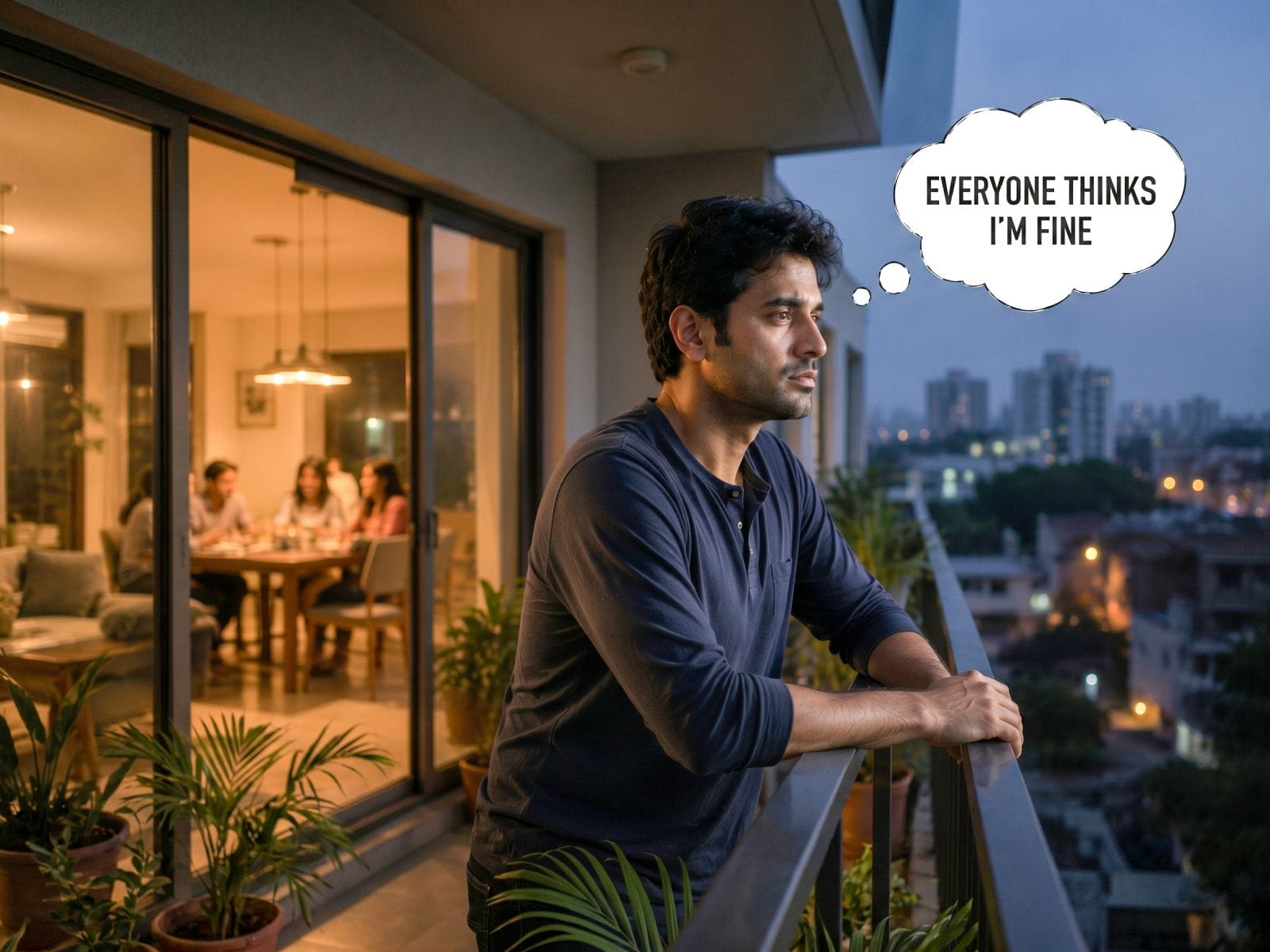
What is actually happening is something in the brain. Certain parts of the brain that handle mood and energy and sleep and concentration are not working the way they should. It is not your fault. It is not weakness. It is not something you brought on yourself by thinking too much or not being grateful enough.
It also means that trying harder, staying positive, or just pushing through will only take you so far. The brain needs support, the same way any other part of the body does when it is not working well. And the good news is, you do not have to figure this out alone.
You Have Been Managing on Your Own for Long Enough
In most Indian families, the natural thing to do is to manage alone. To keep going. To wait it out. And for many things in life, that works. Time does heal a lot.
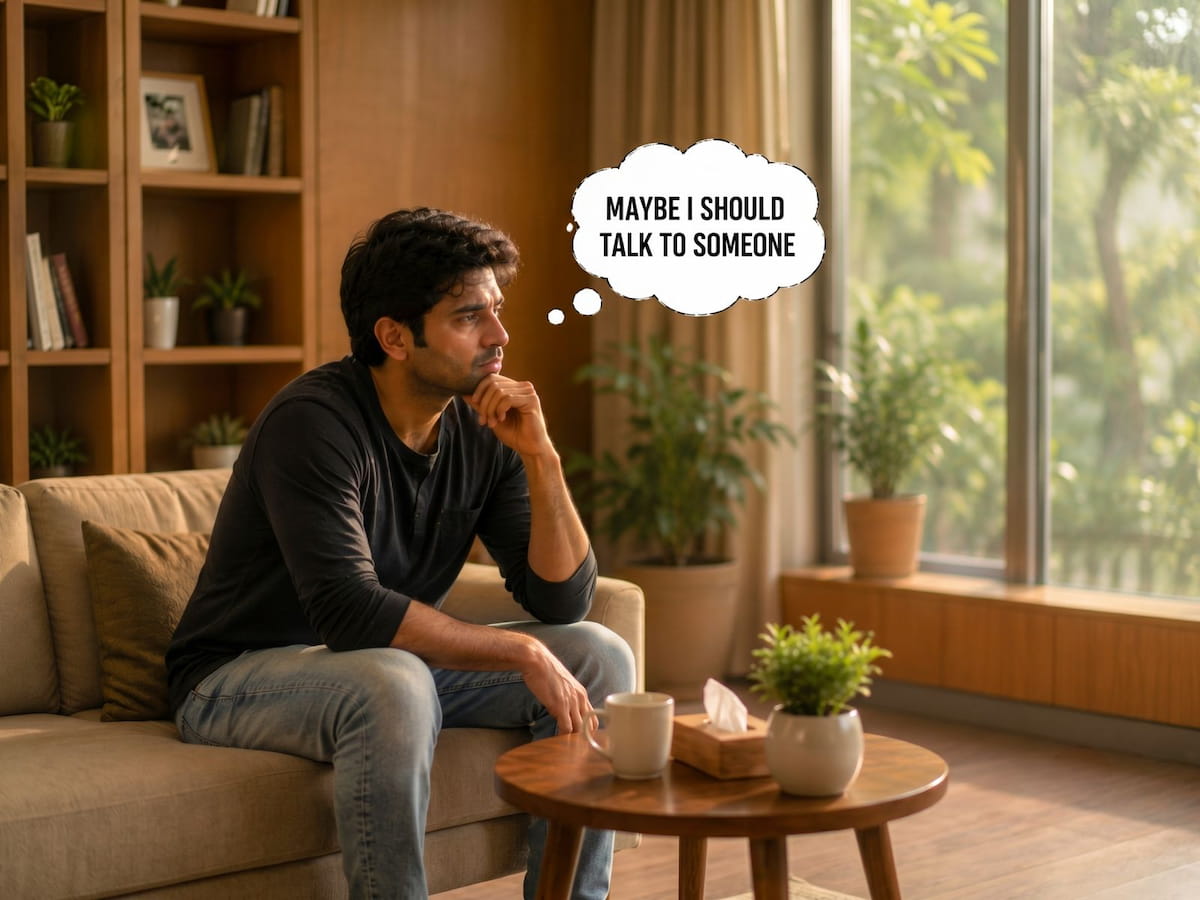
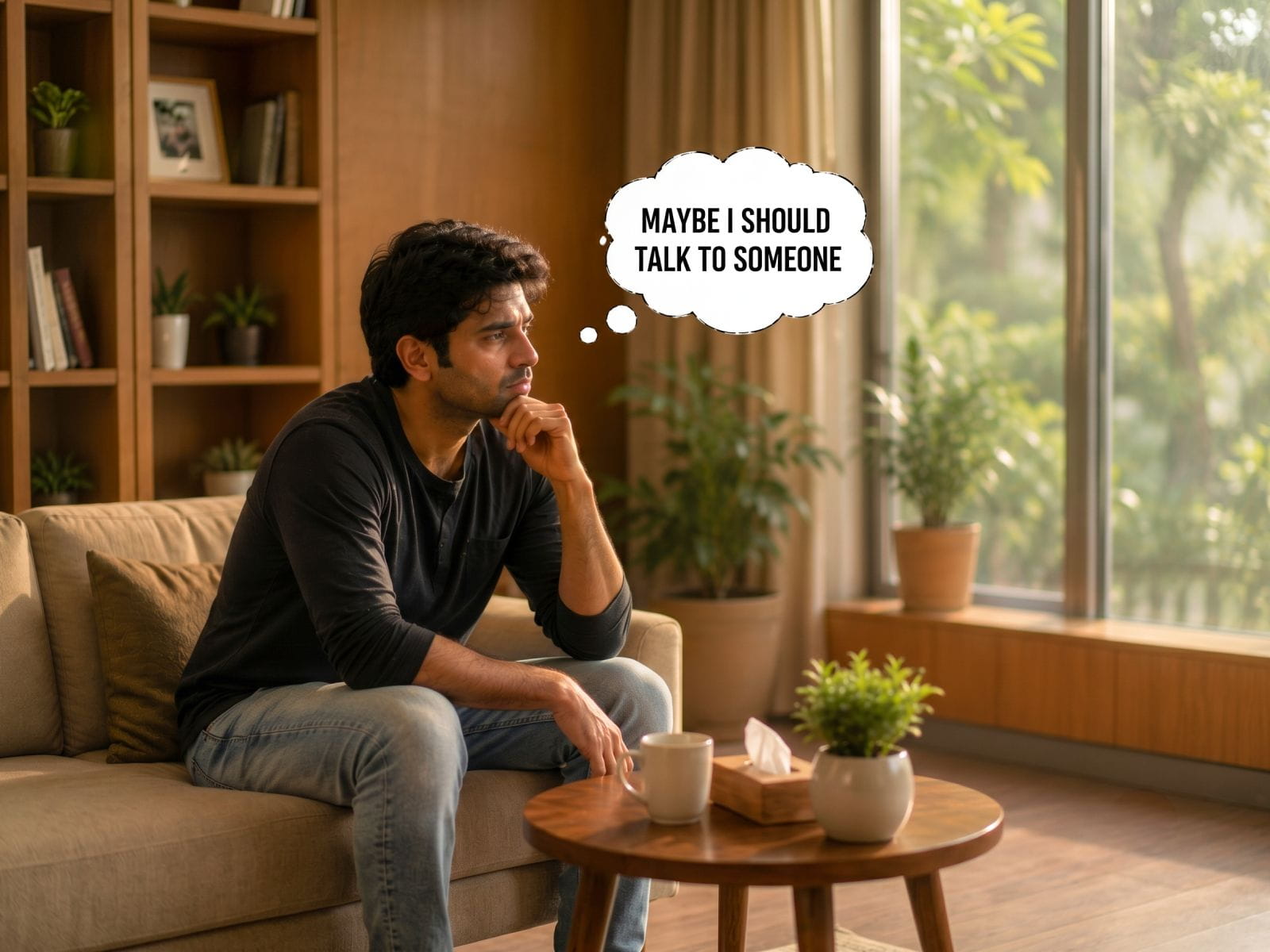
But depression does not follow that pattern. Without the right support, it tends to stay. Sometimes it gets a little better, then comes back. Sometimes it quietly gets worse while everything on the outside looks the same. The brain keeps going the way it has been going, and that is very hard to shift without the right help. Not because you are not strong enough, but because that is genuinely how this works.
And that is an important thing to understand.
Knowing this matters, because it means there is a real reason you have been struggling. It is not in your head. It is not you being dramatic. There is something specific happening, and that something can be addressed.
How People Get Better
The good news is that depression responds well to treatment. Many people who have been struggling for months, sometimes years, do get better. Not just managing, but actually feeling like themselves again, sleeping properly, enjoying things, going about their day without that feeling dragging them down.


Treatment usually involves therapy, which helps you understand what is happening and build ways to cope that actually work. For some people, medicines are also part of the picture. Just as you would not think twice about taking medicines for a thyroid problem or blood pressure, there is no reason to think twice about medicines that help your brain work better.
It does take a few weeks to start feeling the difference. That is normal. The people who give it proper time are the ones who see real change.
The best way to understand what will help you is to talk to someone who can properly understand where you are.
How MindfulTMS Can Help
At MindfulTMS, we treat depression across our clinics in Delhi and Bangalore. When you come to us, we do not rush. You will not be handed a prescription in ten minutes and sent home. We take the time to properly understand your situation, what you have been going through, what you have already tried, and what matters most to you. From there, we work out what makes sense for your specific situation.
You just need to be open to a conversation.
A Newer Option Worth Knowing About
Alongside therapy and medicines, there is a newer treatment called rTMS (repetitive transcranial magnetic stimulation) that is now available in India. It involves gentle magnetic pulses that help certain areas of the brain work better, and it has helped people who felt stuck even after trying other treatments. If you want to understand more about how it works and who it helps, you can read more about rTMS for depression here.
Take the First Step
You do not need to be certain. You do not need to have all your questions ready. Our team will listen and help you figure out what makes sense for you.
One message. One call. One visit. Start anywhere.
Every option below leads to the same simple thing — a conversation with our team.
Why Do I Feel This Way Even When Everything Is Fine
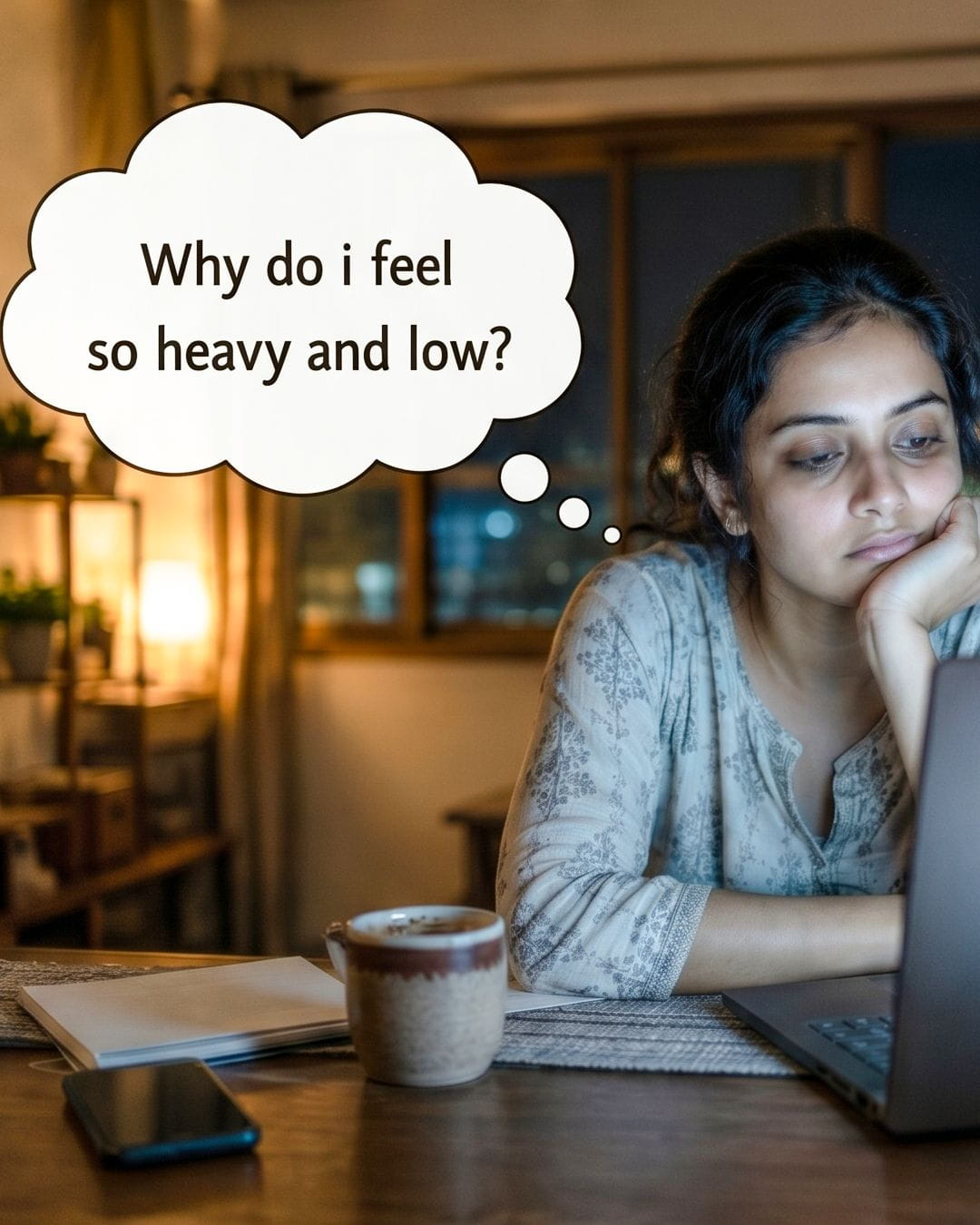
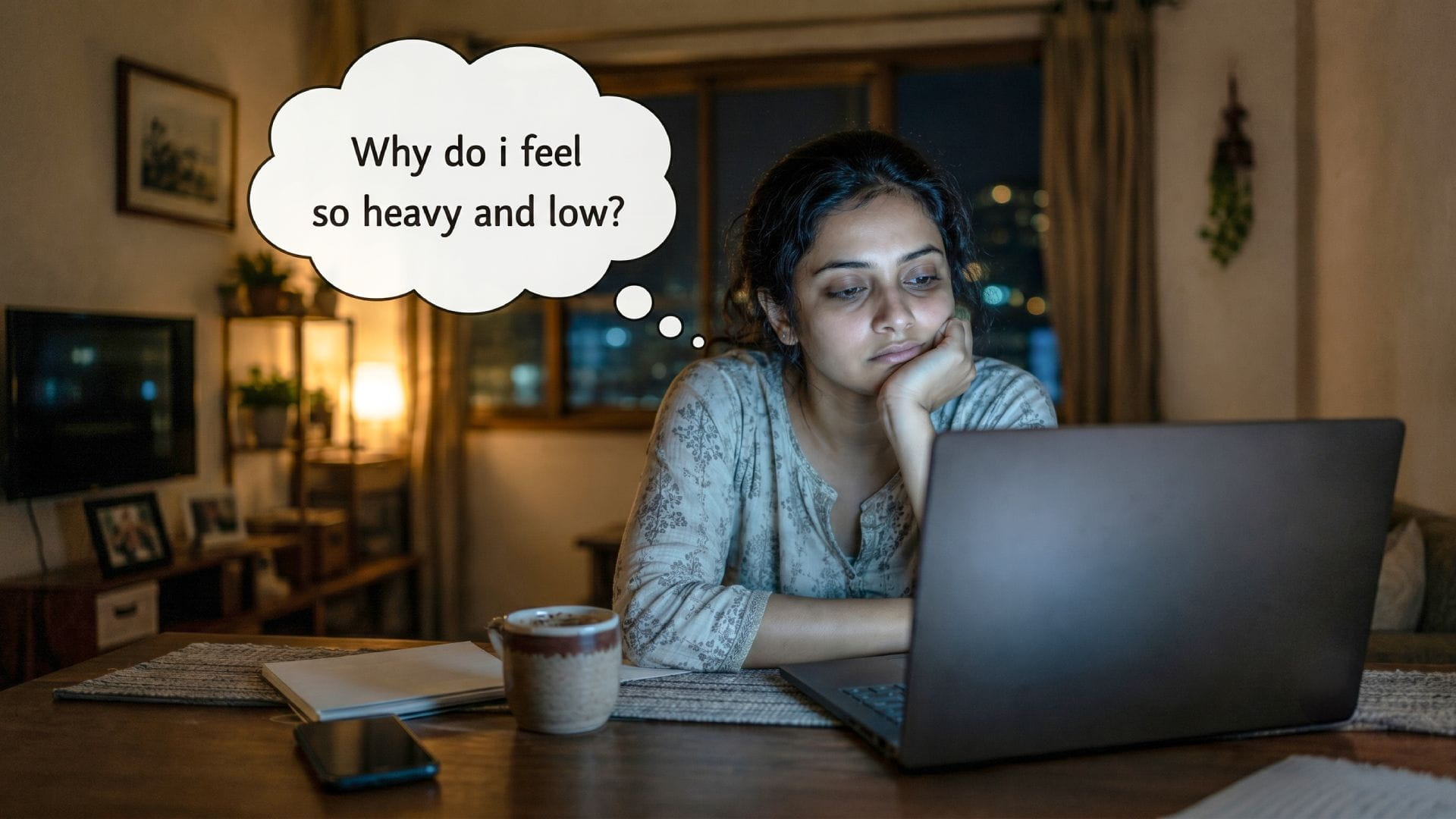
You slept last night. You know you did. But you woke up tired anyway.
You got ready, went to work, came back home. You did everything you were supposed to do. But the whole day felt heavy. And you are not even sure what it is.
It is not like something terrible has happened. Life is more or less fine. Family is okay. Work is okay. But you are just not okay. And you cannot explain why, even to yourself.
You have probably told yourself it is stress. Or maybe you are just doing too much. Or maybe this is just what getting older feels like. So you keep going. Because what else is there to do.
When Everything Starts Feeling Like Too Much
It is not just tiredness. It is something else.
The things that used to make you happy do not feel the same anymore. A family gathering that you used to look forward to now feels like too much effort. A film you were excited about, you watched ten minutes and put it away. Food you used to love, you are eating it only because you have to.
Even small things feel harder than they should. Replying to a message. Making a phone call. Getting up in the morning. Things that never used to take any thought at all now feel like they need effort you do not have.
You are managing. You are showing up. But inside, something feels switched off.
And the strange thing is, nobody around you can tell. From the outside everything looks normal. You are still doing your job, still talking to people, still getting through the day. But you know. You know that something is not right.
You Have Already Been Trying So Hard
The people around you mean well. Your mother says get some rest. Your friend says stop overthinking. Your colleague says everyone goes through phases, it will pass.
And you have tried. You have tried sleeping more, going out more, keeping yourself busy. Some days it helps a little. But it comes back. It always comes back.
This is not a matter of trying harder or thinking more positively. When you have been feeling this way for weeks, sometimes months, it does not just go away on its own.
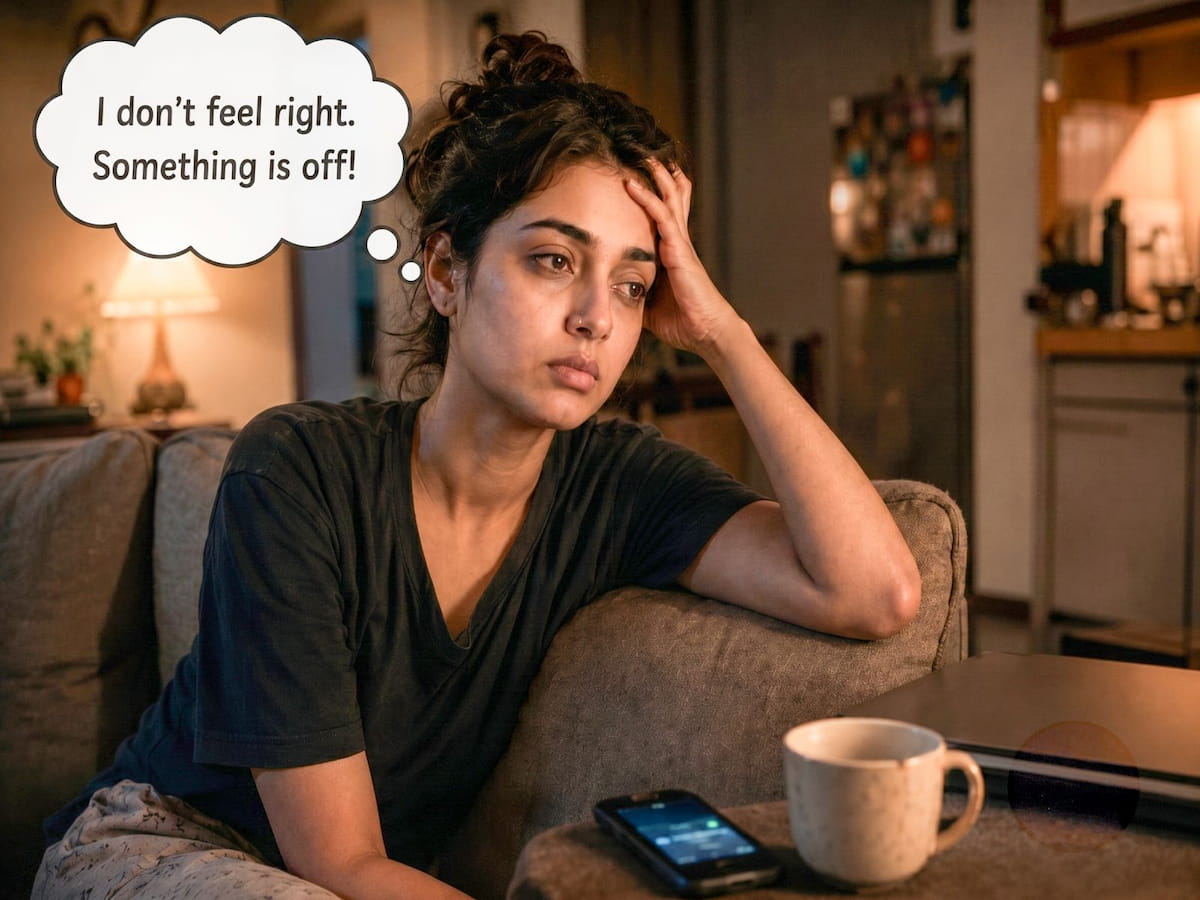
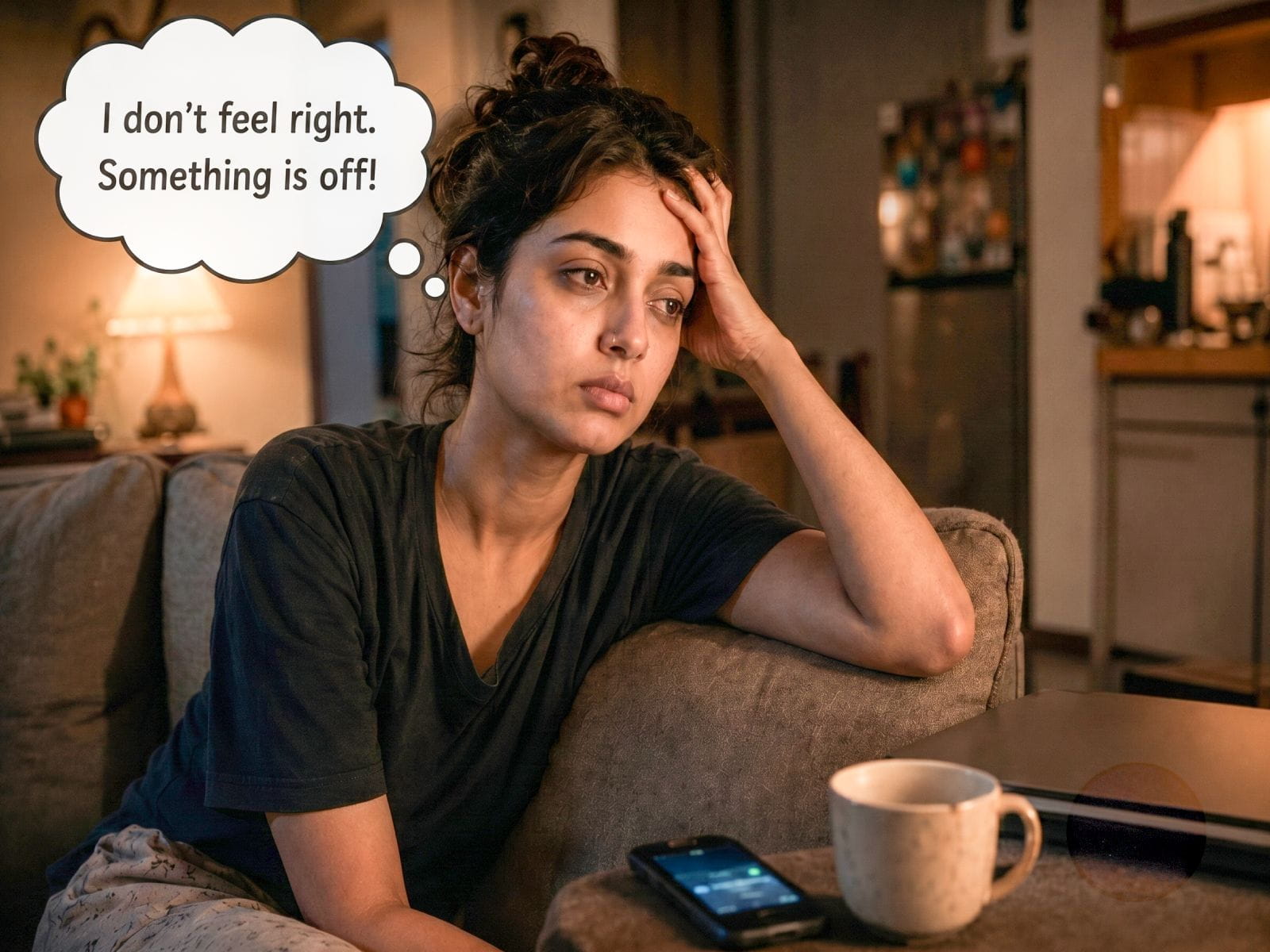
It is not a sign that you are weak. It is not a sign that you cannot handle life. It is your mind telling you that something is not right. The same way your body tells you when something is wrong.
You would not ignore a fever that has been going on for two months. This is no different.
You Are Not the Only One Feeling This Way
When tiredness stays this long and the heaviness does not go away, you are not alone. This is something many people go through. And more importantly, it is something that can get better.
What you are describing, the tiredness, the heaviness, the feeling that something is switched off, it is something doctors call depression. And it is more common than you think. And it does get better.
What you are feeling may be more than just stress or doing too much. It could be that your mind needs some support, the same way your body does when it is not well.
You do not need to figure out exactly what it is on your own. That is not your job. Your job is just to talk to someone. Someone who can properly understand what you are going through.
Many people who have felt exactly the way you are feeling right now are doing much better today. Not by pushing harder. But by getting the right help.
Does This Sound Like You
You do not need a diagnosis to reach out. You do not need to be certain that something is wrong. You just need to feel like something is not quite right.
That is enough.
Talk to us. We will listen.
We have worked with many people who felt exactly the way you are feeling right now. We will not rush you. We will not judge you. Reach out in whichever way feels comfortable — even a small message is a fine place to start.
Frequently Asked Questions
Quick, clear answers to the questions people ask most about depression and rTMS treatment.
Understanding Depression
Recognising Depression Symptoms
What Is rTMS and How Does It Work?
rTMS Treatment — Process, Safety & Practical Questions
rTMS in India — Cost, Access & Booking
Still Have Questions?
If you did not find your answer here, our team is happy to talk it through — in whichever way feels easiest for you.
Your information is secure and confidential.